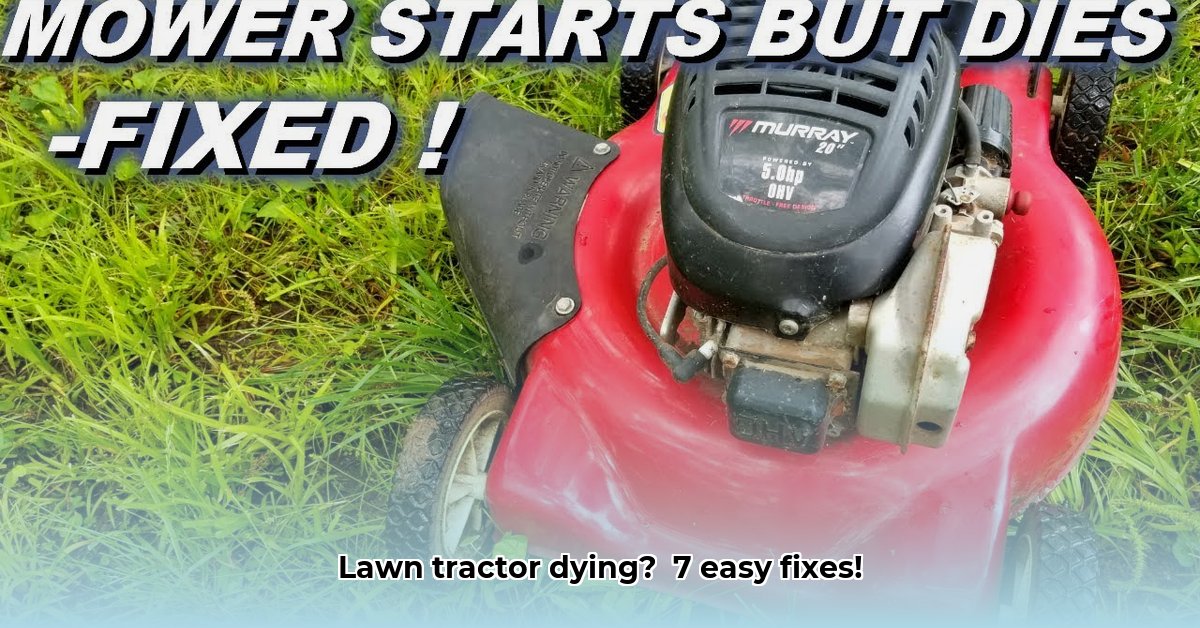
Lawn Tractor Starts Then Dies: A Troubleshooting Guide
So, your lawn tractor starts, runs for a bit, then quits? Frustrating, right? Don't worry, this is a common problem, and in most cases, you can fix it yourself. Let's tackle this step-by-step. Did you know that fuel system issues account for roughly 70% of these types of problems? Let's start there. For more advanced troubleshooting, especially on hydrostatic transmission issues, check out this helpful resource: Hydrostatic Transmission Problems.
1. Fuel System: The Engine's Life Blood
Your lawn tractor's engine needs fuel – it's that simple! Problems here are the most common cause of a tractor starting and then dying.
1.1 Check the Fuel Gauge (and Your Fuel!): Is the tank almost empty? Seems obvious, but it's frequently overlooked. Fill it with fresh, high-quality unleaded gasoline (87 octane is usually sufficient, aim for a maximum ethanol content of around 10%). Old gas can cause serious engine problems.
1.2 Inspect the Gas Cap: A poorly sealed or damaged gas cap can disrupt fuel tank pressure, preventing the engine from drawing fuel properly. Check for cracks, a missing seal, or difficulty closing it securely. Replace it if needed. A small leak can make a big difference!
1.3 Investigating the Fuel Filter: The fuel filter traps dirt and debris that could clog your engine. Over time, it can become clogged, restricting fuel flow. Locate it (your owner's manual will help). If it looks old or dirty, replace it. Ensure correct installation to prevent leaks.
1.4 Checking Fuel Lines for Blockages: Debris can clog fuel lines, stopping fuel from reaching the engine. Carefully inspect the lines for clogs or kinks. If you suspect a blockage, try gently running a thin wire through the line (be extremely careful not to damage the lines).
1.5 The Fuel Pump – When to Call a Professional: The fuel pump delivers fuel from the tank to the engine. A weak or faulty pump won't deliver enough gas. Testing this usually requires specialized tools and knowledge. If you suspect pump issues, call a mechanic; this is often beyond a simple DIY fix.
2. Air Intake: Let Your Engine Breathe
Your engine burns air and fuel. A restricted air supply leads to poor performance and stalling.
2.1 Air Filter Inspection: The air filter keeps dirt out. If it's clogged, your engine will struggle! Locate it (check your manual). If dirty, clean or replace it—a simple, inexpensive fix.
3. Spark, and More Spark: The Ignition System
This is where combustion happens. Problems here can completely stop the engine.
3.1 Spark Plug Check: The spark plug creates the spark. Over time, it can wear out or get fouled, leading to a weak spark. Locate it (disconnect the spark plug wire first!), remove it, and inspect it. Is it heavily coated in carbon, or is the electrode worn? Clean or replace it as needed. Use a gap-checking tool (if available) to ensure correct spark plug gap (refer to your owner’s manual).
3.2 Other Ignition Components: Issues with the ignition coil or other ignition system components can also cause this problem. Troubleshooting these usually requires more advanced knowledge and may require professional help.
4. Carburetor Conundrums: Fuel and Air Mixing
The carburetor mixes fuel and air. If it's clogged or malfunctioning, your engine won't get the correct mixture.
4.1 Carburetor Cleaning or Replacement: Cleaning a carburetor is tricky. Using a specific carburetor cleaner and careful attention to detail is a must. If uncomfortable, seek professional help.
5. Cooling System: Keeping Cool
Overheating can cause engine problems, including stalling.
5.1 Cooling Fin Inspection: The engine's cooling fins dissipate heat. If clogged with debris, the engine might overheat and shut down. Clean them thoroughly.
6. Oil: The Engine's Lubricant
Low oil levels dramatically increase friction and can damage the engine, including stalling.
6.1 Oil Level Check: Check the oil level using the dipstick. Ensure it is within the specified range in your owner's manual. Using the wrong type or amount of oil can cause significant engine damage.
7. When Professional Help is Needed
If the problem persists after these steps, call a professional. Issues like fuel pump, ignition coil, or complex carburetor problems require specialized tools and expertise. Don't hesitate to contact a qualified mechanic.
Troubleshooting Table: Lawn Tractor Starts and Dies
| Problem | Possible Causes | Potential Solutions | When to Call a Pro |
|---|---|---|---|
| Starts, then dies | Low fuel, bad gas, clogged fuel filter, clogged fuel line | Refill with fresh fuel, replace filter, clear lines | If problems persist after troubleshooting fuel system |
| Starts, then dies | Dirty air filter | Clean or replace air filter | Usually not necessary |
| Starts, then dies | Worn or fouled spark plug | Clean or replace spark plug | Usually not necessary |
| Starts, then dies | Clogged carburetor | Clean carburetor (difficult DIY, usually pro needed) | Always recommended for carburetor issues |
| Starts, then dies | Low oil level, incorrect oil type | Check and add/change oil (use correct type and amount) | If unsure about oil type or amount |
| Starts, then dies | Overheating (clogged cooling fins) | Clean cooling fins | If fins are damaged beyond cleaning |
| Starts, then dies | Faulty fuel pump, ignition coil, other electrical issues | Professional diagnosis and repair | ALWAYS |
Remember: Safety first! Always disconnect the spark plug wire before working on the ignition system to prevent accidental starting.